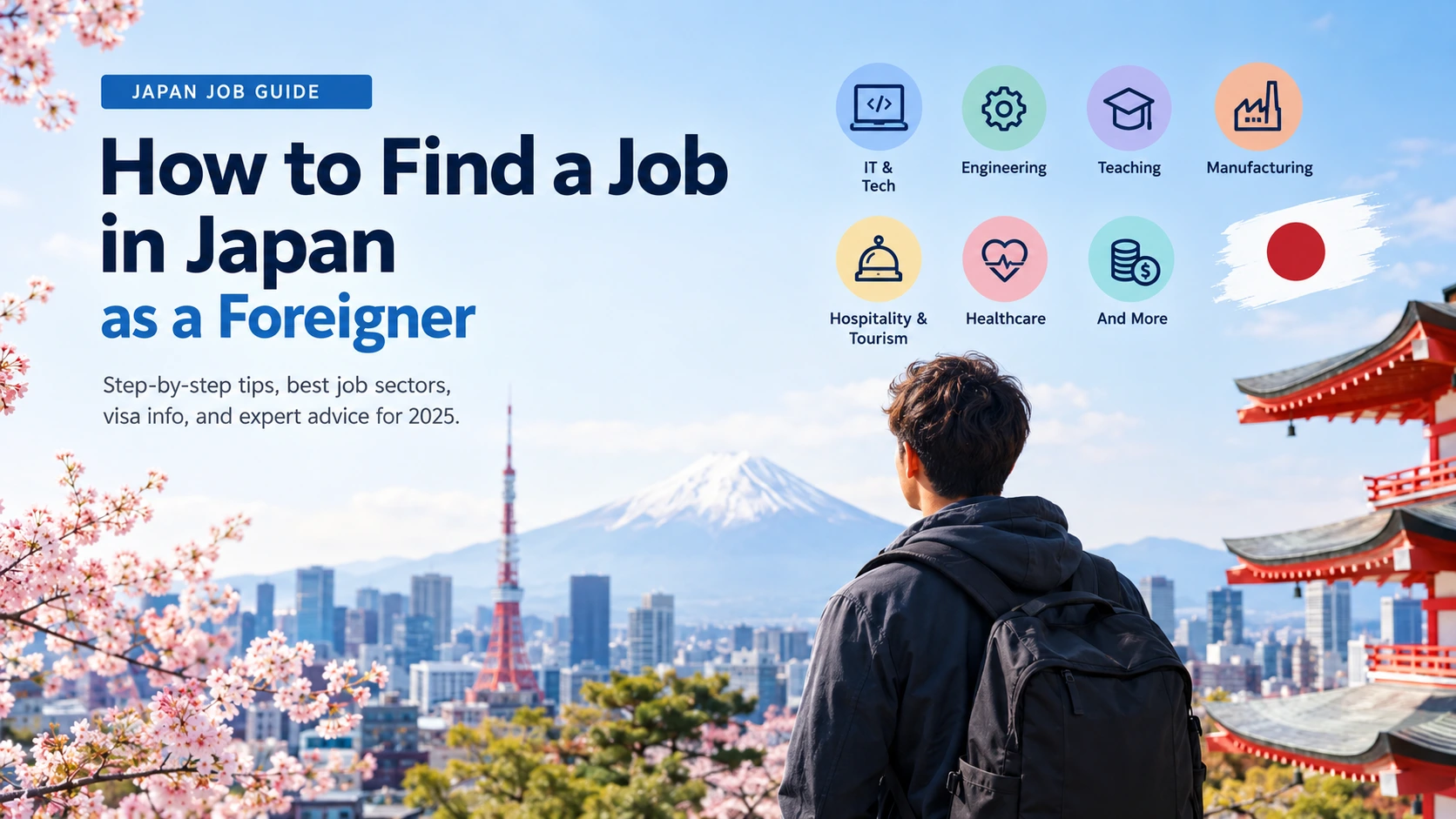
Can Foreigners Get Jobs in Japan?
Yes. Foreigners can work in Japan when they have an appropriate status of residence and meet the requirements for the job and immigration category.
Professional Roles
Software development, engineering, business, finance, design, education, and other professional roles can be options depending on qualifications and employer needs.
Skilled Work
Some occupations can be available through Japan's Specified Skilled Worker system, subject to the applicable occupation and immigration requirements.
International Companies
International companies and some Japanese technology companies may offer positions where English is the main working language.
Overseas Applicants
You do not necessarily have to move to Japan before applying. Some employers interview overseas candidates online and support the immigration process after hiring.
Choose an Industry That Matches Your Skills
Start with your existing skills instead of searching for every job available in Japan. Your industry and experience will influence the jobs, language requirements, and visa options you can realistically target.
IT and Software Development
IT is one of the areas where foreigners may find opportunities, particularly when they have in-demand technical skills. Roles can include software engineering, web development, mobile development, cloud, data, and cybersecurity.
Useful skills
Application tip: Show practical projects, technical achievements, GitHub work, and the technologies you actually used.
If you're applying for software and technology roles, you may also want to understand which job categories are growing fastest in 2026 and how employers are evaluating candidates.
Engineering and Manufacturing
Japan's manufacturing sector creates opportunities across mechanical, electrical, automotive, production, and industrial engineering. Some manufacturing roles may also fall under skilled-worker immigration routes.
Possible roles
Teaching and Education
Teaching has long been a visible route for foreigners, particularly English-language teaching. Opportunities can include language schools, assistant language teaching, international schools, universities, and private teaching.
Hospitality and Tourism
Hotels, resorts, restaurants, travel businesses, and other tourism-related employers may hire international workers, particularly where foreign-language skills are useful.
Do You Need to Speak Japanese?
Not necessarily. Some companies, particularly international employers and selected technology companies, have English-speaking positions. However, Japanese ability can significantly expand the number of jobs available to you.
English-Friendly Jobs
Search for positions described as English-speaking, international, bilingual, or foreigner-friendly. Always read the actual language requirement because titles can be misleading.
Japanese Expands Options
Japanese can make it easier to work with Japanese customers and colleagues and can open opportunities that are unavailable to candidates who only speak English.
What About JLPT Levels?
JLPT levels are commonly used by employers to describe Japanese proficiency. Requirements vary by role, so do not treat a particular JLPT level as a universal requirement. For professional jobs that require regular Japanese communication, N2 or higher may be requested or preferred.
Understand the Japan Work Visa Process
Before applying, understand whether the position and your qualifications fit an appropriate status of residence. Visa rules depend on the occupation, employer, and your circumstances.
Check Eligibility
Confirm that your education, experience, occupation, and job offer fit the relevant immigration category.
Confirm Sponsorship
Ask whether the employer supports work-visa applications and which status of residence they expect you to use.
Certificate of Eligibility
For many overseas hires, the employer supports the Certificate of Eligibility process before the candidate applies for the visa.
Apply for the Visa
Follow the current instructions from the relevant Japanese authorities and your local Japanese embassy or consulate.
Questions to Ask the Employer
- • Does the company sponsor work visas?
- • Which status of residence will the role use?
- • Who handles the immigration paperwork?
- • What documents do I need to provide?
- • Is relocation assistance available?
Where to Find Jobs in Japan
Don't rely on one website. Use a combination of job boards, company career pages, recruiters, and professional networks.
GaijinPot
A well-known platform for foreigners looking for jobs in Japan, including English-friendly positions.
Visit GaijinPot Jobs →Daijob
Useful for bilingual and professional opportunities in Japan.
Visit Daijob →Indeed Japan
Search Japanese and English listings and filter by role, location, and other requirements.
Visit Indeed Japan →Wantedly
Can be useful for startup and company-culture-focused opportunities.
Visit Wantedly →Don't Forget Company Career Pages
If there are Japanese companies you specifically want to join, check their careers pages directly. Some positions may appear on company websites but not on the English-language job boards you normally use.
If Japan is only one part of your international job search, you can also explore our guide to top remote jobs in the USA in 2026 and the types of work-from-home careers available.
Prepare Your Resume for the Japanese Job Market
Don't simply translate your existing CV. Adapt your application to the employer and the format they request.
Before applying, you can also learn more about why ATS matters for job selection and how ATS resume checkers work .
Rirekisho
The rirekisho is a standardized Japanese resume-style document. Depending on the employer, it may include personal information, education, employment history, qualifications, motivation, and a photograph.
Shokumu Keirekisho
The shokumu keirekisho focuses more deeply on professional experience, responsibilities, projects, achievements, and technical skills.
Show Results, Not Just Responsibilities
Instead of only saying "Developed web applications," explain what you built, which technologies you used, and what improved as a result.
Use a Professional Photo When Requested
A photograph is common in traditional Japanese resume formats. Follow the employer's requested format rather than adding one automatically to every application.
Keep an English CV Too
International companies may prefer an English resume. Keeping both English and Japanese application documents ready makes it easier to respond to different employers.
Build an ATS-Friendly Resume with JobNCV
Create a clear resume that highlights your real skills, experience, projects, and achievements for the jobs you want to apply for.
Create Your Resume →Prepare for Japanese Job Interviews
Research the company before your interview and be ready to explain both your professional background and why you want to work in Japan.
Research the Company
Understand its products, customers, services, culture, and the role you are applying for.
Prepare a Self-Introduction
Prepare a concise introduction covering your experience, skills, and the type of role you are seeking. If the job requires Japanese, prepare a Japanese version too.
Have a Strong Answer for "Why Japan?"
Connect Japan to your career goals and the position. Explain why the company and role are interesting to you, rather than focusing only on tourism or popular culture.
Prepare for Technical Questions
For technical roles, be ready to discuss your projects, architecture decisions, tools, problems you solved, and the results of your work.
Salary, Benefits, and Working Conditions
Salary varies widely by industry, experience, location, language ability, technical skills, and employer. Do not evaluate an offer using salary alone.
Base Salary
Compare the annual and monthly salary and understand whether bonuses are included.
Bonus
Some employers provide bonuses, but the amount and frequency vary significantly.
Housing and Relocation
Check whether housing, relocation, or transportation support is available.
Working Hours
Ask about normal hours, overtime, weekend work, holidays, and remote-work policies.
Questions to Ask Before Accepting
Common Mistakes Foreign Job Seekers Make
A strong job search is not only about finding vacancies. Avoiding common application mistakes can save time and improve the quality of your applications.
Applying Without Checking Visa Support
Check whether the employer supports the immigration route required for the position before investing significant time in the application.
Using the Same Resume Everywhere
Adapt your application to the genuine requirements of each position.
Ignoring Japanese Language Requirements
Don't assume that an English-language job title means Japanese is unnecessary. Read the complete description.
Not Researching the Company
Learn about the employer, role, products, and working environment before the interview.
Focusing Only on Salary
Consider benefits, overtime, holidays, housing, location, relocation assistance, and long-term career conditions.
A Practical Six-Month Job Search Plan
If you're currently outside Japan, you can use a structured plan instead of applying randomly.
Build Your Foundation
Choose your target industry, research visa requirements, update your CV, improve your portfolio, and start learning Japanese.
Start Searching
Create profiles on relevant job platforms, identify companies, connect with recruiters, and begin targeted applications.
Increase Quality Applications
Apply consistently, customize your resume, practice interviews, improve Japanese, and continue building your technical or professional skills.
Focus on Interviews and Offers
Compare salary, benefits, visa sponsorship, contract conditions, working hours, location, relocation support, and career opportunities before accepting an offer.
Ready to apply in Japan?
Build a Resume for Your Japan Job Search
Create an ATS-friendly resume that clearly presents your skills, experience, projects, and achievements for the roles you want to apply for.
Build Your Resume →Frequently Asked Questions About Jobs in Japan
Answers to common questions foreigners have when searching for jobs in Japan.
Can foreigners get jobs in Japan?
Yes. Foreigners can work in Japan when they meet the requirements for an appropriate status of residence and the job itself. Opportunities vary by industry, qualifications, language ability, and employer.
Do I need to know Japanese to work in Japan?
Not for every job. Some companies offer English-speaking positions, particularly in international and selected technology environments. Japanese ability can significantly expand the number of opportunities available.
Can I apply for a Japan job from another country?
Yes. Some employers interview overseas candidates online and support immigration procedures after making an offer. Always check whether the company accepts overseas applicants and provides visa support.
What is a rirekisho?
A rirekisho is a standardized Japanese resume-style document. Employers may request it alongside a more detailed career-history document.
Should I learn Japanese before applying?
Learning Japanese while you search can be useful. Even if your first target role is English-speaking, Japanese can make daily life easier and may expand your future career options.
How should I choose between two job offers?
Compare the complete employment conditions: salary, bonuses, benefits, working hours, overtime, holidays, visa support, relocation assistance, location, and the responsibilities of the role.
Final Thoughts
Finding a job in Japan as a foreigner is possible, but the right strategy depends on your skills, experience, Japanese ability, target industry, and immigration situation.
Start with your career rather than simply searching for "jobs in Japan." Identify suitable roles, check visa sponsorship, prepare the right application documents, use multiple job-search channels, and practice for interviews.
Most importantly, don't assume that every Japanese company has the same language requirements or workplace culture. Research each employer and read the job description carefully before applying.
Create Your Resume with JobNCV →Sources and References
This guide was prepared using the following references. The content has been rewritten and organized into a practical guide rather than copied from the source articles.
- Japan Living Life: How to Find a Job in Japan as a Foreigner
- GaijinPot: How to Find a Job in Japan: 2025 Definitive Guide
- ExpatDen: Working in Japan: Positions, Work Life, Salary, and Challenges
Immigration, visa, salary, and employment conditions can change. Verify current requirements with the relevant Japanese authorities and the employer before making employment or relocation decisions.